Ahlawat Advisory Expands Law-Firm-Backed Employer of Record Services for Global Companies Hiring in India
New Delhi, Delhi Aug 21, 2026 (Issuewire.com) Backed by a legal practice operating since 1978, the A&A Group advisory

Press Release Disclaimer: This is a press release distributed through the XPR Media network. It has not been independently verified by our newsroom.
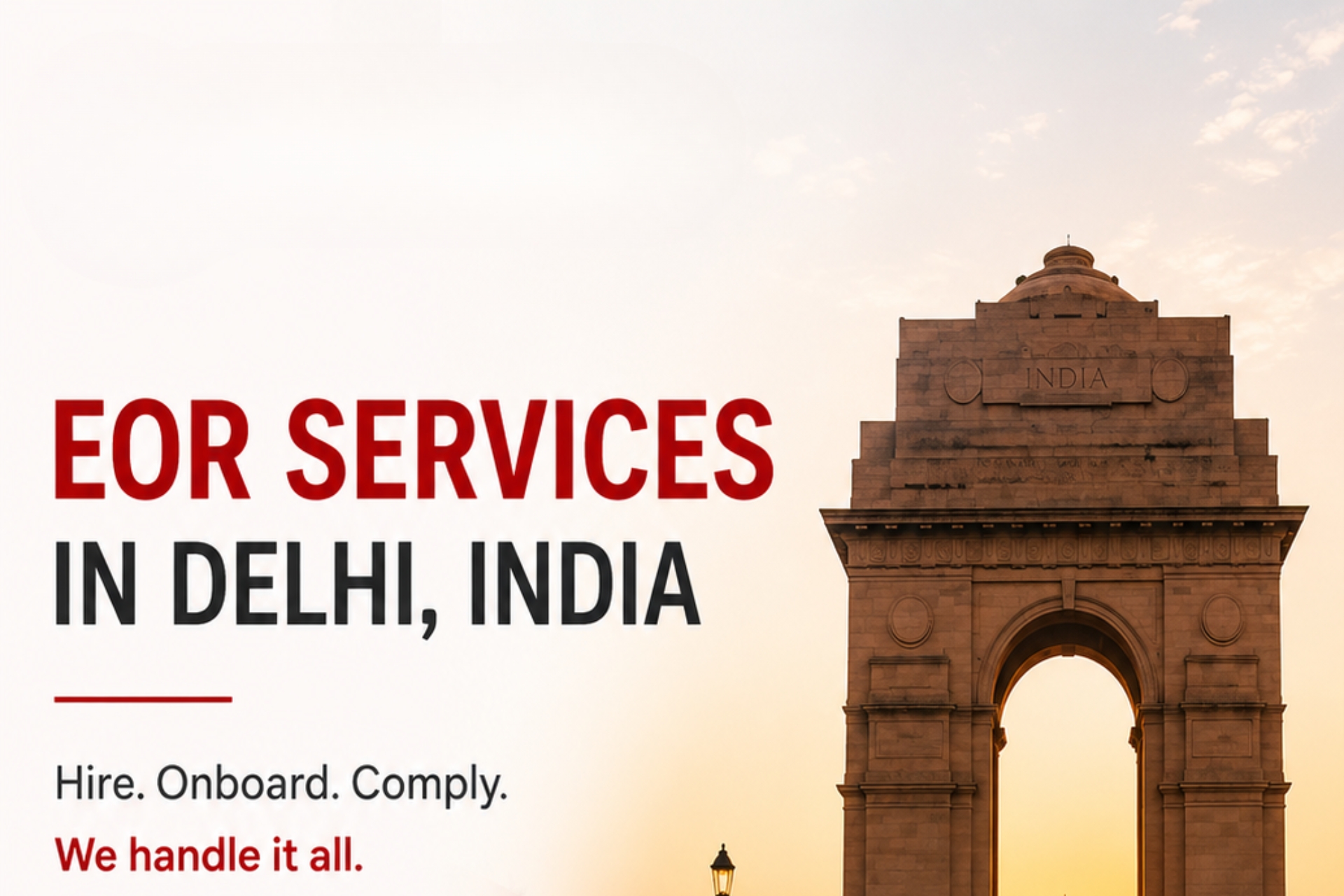

New Delhi, Delhi Aug 21, 2026 (Issuewire.com) Backed by a legal practice operating since 1978, the A&A Group advisory arm lets companies in the United States, Europe, Australia, the Gulf and across Asia employ India-based teams in one to two weeks without incorporating an Indian entity, and without exposing the parent company to Indian corporate tax
Ahlawat Advisory, the outsourcing and compliance management arm of the A&A Group, today outlined an expanded Employer of Record (EOR) and India-entry advisory offering for foreign companies building teams in India. Arriving at a moment when three simultaneous regulatory changes have made informal hiring arrangements materially riskier than they were even a year ago, Ahlawat Advisory allows global companies hiring in India a more streamlined and simpler process.
India recodified its entire labour framework on 21 November 2025, when four Labour Codes replaced 29 central statutes. On 1 April 2026, the Income-tax Act, 2025 came into force, renumbering salary withholding from Section 192 to Section 392 and replacing Form 16 with Form 130. On 1 July 2026, the EPF Scheme 2026 tightened filing to fifteen days. For a foreign company paying an Indian worker from an overseas payroll, each change converts a quiet administrative habit into a documented liability.
“Most companies do not get into trouble in India because they intended to cut a corner. They get into trouble because they wired a salary to a personal bank account, called the person a contractor, and assumed a contract written in Chicago or Sydney would hold in an Indian court. It does not. Three years later the provident fund, the gratuity and the back taxes all arrive at once, with interest and by then it is a diligence problem, not a payroll problem.”
Uday Singh Ahlawat, Managing Partner
What the offering covers
Ahlawat Advisory acts as the legal employer on record in India through its own registered entity, while the client retains full day-to-day control over the team’s work, priorities and performance. The service spans the complete employment lifecycle.
Its Employer of Record practice covers India-compliant employment contracts, statutory employment documentation, labour law compliance oversight, and onboarding and exit compliance across the employee lifecycle. Payroll and statutory compliance cover payroll structuring, TDS, Provident Fund, ESI and professional tax administration, payroll audit readiness and certification, and ongoing compliance reporting.
India entry and company incorporation covers market entry readiness, FDI and regulatory compliance, entity setup planning, and structured EOR-versus-subsidiary analysis. Contractor engagement and compliance cover contractor classification and risk opinions, agreement drafting and review, GST and TDS advisory on contractor payments, and cross-border remittance structuring under FEMA. Accounting, tax and Virtual CFO services cover bookkeeping and financial reporting, GST setup and filings, corporate tax compliance, and dedicated senior finance oversight for India operations.
Clients hire across India’s principal talent hubs, including Bengaluru, Hyderabad, Mumbai, Delhi NCR, Pune and Chennai, and receive a single consolidated monthly invoice in their own currency, with no foreign exchange spread buried inside the rate.
A law firm, not a payroll platform
The A&A Group traces its practice to 1978, when it began as a litigation firm before developing into a full-service platform spanning corporate and commercial law, mergers and acquisitions, employment law, intellectual property and dispute resolution. That heritage shapes how the EOR service is delivered.
Statutory filings for PF, ESI, TDS and professional tax across every state where a client hires run under Ahlawat Advisory’s own registrations, and clients receive the actual challan numbers and TDS receipts each month. Contracts, intellectual property assignment and terminations are handled by practitioners who advise on and litigate Indian employment law, rather than routed through a support ticket queue.
Timeline, cost and permanent establishment
Establishing a wholly owned Indian subsidiary typically runs six to sixteen weeks from decision to first payroll, once name approval, apostilled documents, a resident director, foreign-owned-entity bank activation and state Shops and Establishments registration are accounted for. That is followed by standing costs for a company secretary, statutory audit, and RBI filings such as FC-GPR, APR and FLA that foreign parents routinely miss and are penalised for.
Under the EOR model, the same first hire is typically onboarded in one to two weeks. Pricing comprises three transparent components: the employee’s gross salary, statutory employer contributions, and a flat monthly per-employee fee. Employer-side Provident Fund runs at 12 percent of basic salary and gratuity accrues at 4.81 percent of basic plus dearness allowance. ESI adds 3.25 percent of gross but applies only where wages fall at or below 21,000 per month, placing most professional and technical hires outside it. As a planning rule, Ahlawat Advisory advises budgeting an additional 15 to 20 percent above gross salary for the statutory layer.
Because the Indian entity is the legal employer and contract-concluding authority remains with the client’s home company, the employment relationship never lands inside the foreign parent. That is the structural feature keeping the parent clear of permanent establishment exposure, an area Indian tax authorities have pressed harder through 2025 and 2026.
The firm also publishes jurisdiction-specific guidance reflecting how differently the analysis runs by treaty. The India-Netherlands DTAA sets a service PE threshold of more than six months within any twelve-month period. The India-UK and India-US treaties trigger at 90 aggregated days. The India-Singapore treaty can trigger at 30 days on a project basis. Ahlawat Advisory maintains dedicated resources for companies expanding from the United States, the United Kingdom, Germany, the Netherlands, Australia, Canada, Japan and Singapore.
Scaling beyond the EOR phase
For clients whose India headcount outgrows the model, typically in the region of 25 to 40 employees, Ahlawat Advisory manages the transition to a wholly owned subsidiary. Employment contracts transfer with continuity of service so accrued gratuity carries across, and payroll, statutory registrations and employee benefits are realigned without disruption. The same pathway supports multinationals standing up a Global Capability Centre, employing the initial engineering, analyst and support cohort compliantly before the entity is incorporated.
About Ahlawat Advisory
Ahlawat Advisory is the outsourcing and compliance management arm of the A&A Group, which has advised clients since 1978 with the core objective of helping foreign firms do business in India. The Group delivers legal, compliance, accounting and banking services through its legally established group entities, acting as a single point of contact for international businesses operating in India.
Through Ahlawat Advisory, the Group serves as the legal Employer of Record in India, enabling global businesses to hire and scale Indian teams without establishing a local entity, and maages statutory documentation, payroll, labour law compliance, contractor engagement and ongoing regulatory obligations. The firm additionally supports India market entry, entity transition, tax compliance and Virtual CFO services.
Ahlawat Advisory is headquartered in New Delhi.
Media Contact
Nikita Garg
+91-7428899979
LGF #TheHub, Plot No. 66, Okhla Phase III, Okhla Industrial Estate
Source :Sources: Ahlawat Advisory, Ahlawat Associates
This article was originally published by IssueWire. Read the original article here.