
Newman’s Auto Body Explains How Paint Matching and Blending Restore a Consistent Vehicle Finish
Olathe, KS - November 18, 2026 - PRESSADVANTAGE - Newman’s Auto Body & Repair is publishing consumer guidance

Press Release Disclaimer: This is a press release distributed through the XPR Media network. It has not been independently verified by our newsroom.
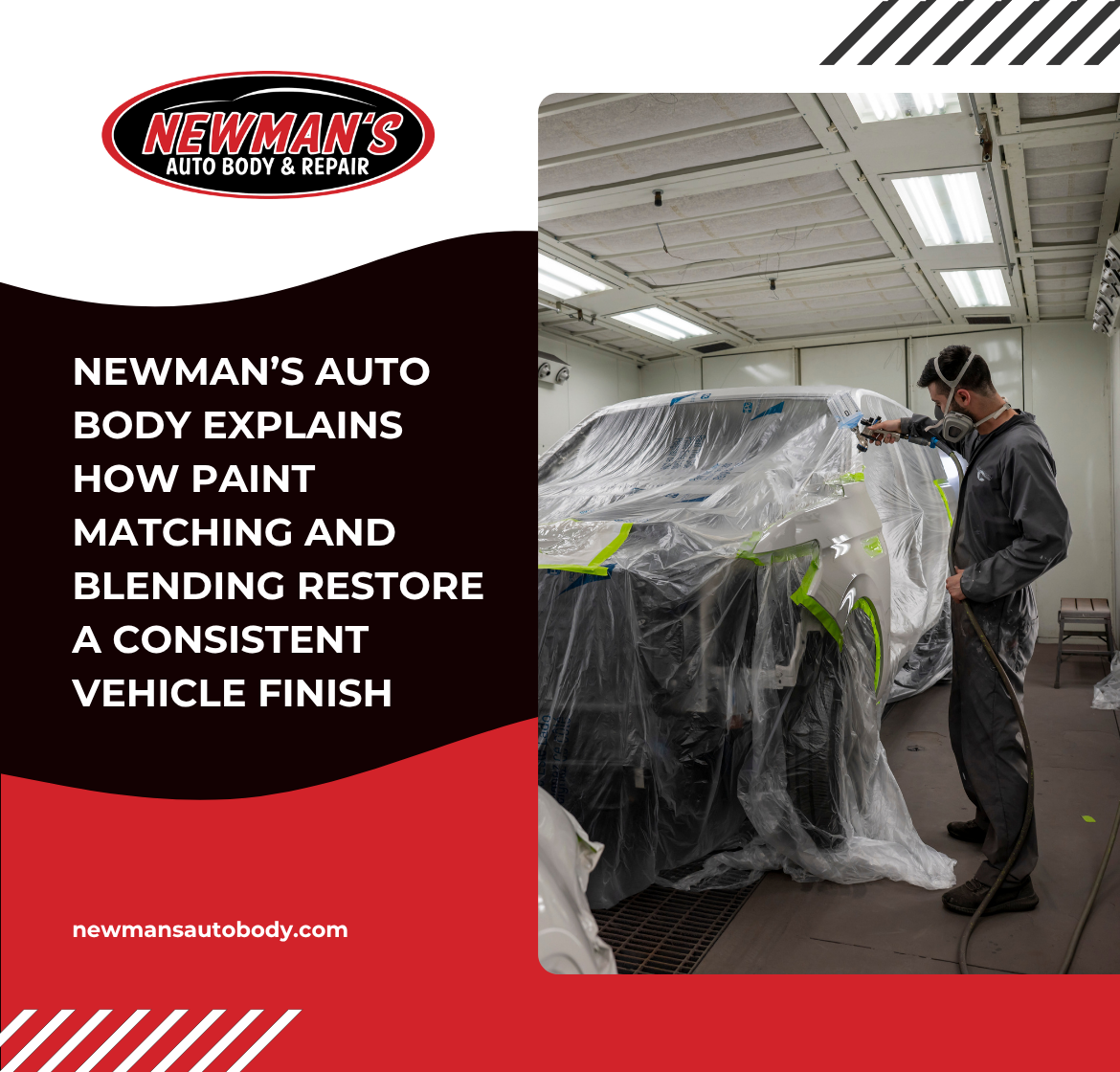

Olathe, KS – November 18, 2026 – PRESSADVANTAGE –
Newman’s Auto Body & Repair is publishing consumer guidance explaining how paint matching and blending can help restore a consistent exterior finish after collision repair. The November resource focuses on why technicians consider more than a vehicle’s factory paint code when refinishing damaged panels and how blending into an adjacent panel may be used when appropriate to create a more consistent visual transition.
Collision damage frequently affects painted exterior surfaces. A repair may involve straightening a damaged panel, replacing a component, repairing scratches or dents, and refinishing the affected area. While restoring the shape of the vehicle is an important part of the process, the repaired area also needs to coordinate visually with the surrounding finish.
Newman’s Auto Body & Repair explains that paint matching begins with identifying the vehicle’s original color information, but the factory paint code is only a starting point. Its auto body repair services can include refinishing as part of restoring collision-damaged exterior panels.
A paint code identifies the original color specification associated with a vehicle. However, two vehicles with the same factory color code may not always appear exactly the same after years of use.
Age, environmental exposure, previous refinishing, application differences, and the condition of the existing paint can influence how a color appears on an individual vehicle. Some factory colors can also have variations that technicians need to consider when developing a refinishing plan.
For this reason, paint matching involves evaluating the finish that is actually on the vehicle rather than relying only on the code.
The type of paint finish can also affect the process. Solid colors, metallic finishes, pearl finishes, and other multi-stage systems interact with light differently. Metallic particles and other visual effects can influence how a color appears depending on lighting, viewing angle, and application.
A refinished panel may therefore need to be evaluated in relation to the panels beside it. A color that appears close under one lighting condition can look different from another angle or under different light.
Paint matching and paint blending address different parts of this challenge.
Paint matching involves developing a color that coordinates with the existing vehicle finish. Blending is a refinishing technique that gradually transitions color into an adjoining panel when the repair circumstances make that approach appropriate.
For example, a collision may substantially damage a front fender and require body repair or replacement. The repaired fender sits directly beside other painted components. Depending on the color, condition of the existing finish, and repair plan, blending into an adjacent panel may be used to help create a less noticeable transition.
Blending does not mean every panel next to a repaired component automatically requires refinishing. The appropriate approach depends on the location of the repair, characteristics of the color, surrounding panels, existing finish, and applicable refinishing procedures.
Newman’s Auto Body & Repair’s collision repair services address the broader process of evaluating accident damage and developing the repair plan. Refinishing is one part of that process after technicians determine which damaged components will be repaired or replaced.
Surface preparation is another important part of the finished appearance.
Before applying the necessary refinishing materials, the repaired or replacement surface must be prepared according to the work being performed. Depending on the component and repair, preparation can include cleaning, sanding, priming, masking, and other steps associated with the refinishing process.
The appearance of a completed repair depends on more than applying the correct color. Surface condition and application of the different refinishing layers can also affect how the repaired area looks when the vehicle is completed.
Replacement panels require similar consideration. Installing a new exterior component does not eliminate the refinishing process. The replacement component generally still needs appropriate preparation and refinishing so its appearance coordinates with the rest of the vehicle.
Repair planning and refinishing planning are therefore closely connected. Decisions about which components can be repaired and which require replacement can influence the surfaces that need preparation, color application, blending, and other refinishing operations.
The same applies when damage is limited to one section of a panel. Body repair addresses the physical damage, while the refinishing plan considers how the repaired area will transition into the surrounding finish.
Lighting and viewing angle can be useful when evaluating the result. Automotive colors, particularly those containing metallic or pearl effects, can appear different as lighting conditions change.
Final quality-control checks can therefore include reviewing the refinished area together with adjoining panels instead of considering the repaired panel by itself. This provides an opportunity to evaluate the relationship between the newly refinished surface and the existing vehicle finish.
Paint blending should also be distinguished from simply applying more paint to surrounding panels. When used, blending is a controlled part of the refinishing process intended to manage the transition between newly applied color and an existing finish.
The November guidance also explains why the complete refinishing scope may not always be established from a quick exterior look at the vehicle. Collision damage analysis determines which components require repair or replacement, and those decisions can influence the final refinishing plan.
If additional collision-related damage becomes accessible during disassembly, the repair plan may change. A change in the panels being repaired or replaced can consequently affect which surfaces require refinishing.
Vehicle-specific information can also be relevant during collision repair. Newman’s Auto Body & Repair provides additional information about manufacturer-focused repair considerations through its OEM certifications resource. Applicable procedures can help technicians account for the materials and components involved in the repair.
For consumers, the important distinction is that identifying a factory paint code is not the complete paint-matching process. The code provides a starting reference, while the actual vehicle finish provides additional information technicians can consider when planning the refinishing work.
The November resource organizes the process around three practical stages. First, the existing finish and collision-damaged panels are evaluated. Next, technicians establish the refinishing approach based on the repaired or replaced components and determine whether blending is appropriate. Finally, the completed finish can be reviewed in relation to adjoining panels as part of quality control.
This approach helps explain why two apparently similar collision repairs may involve different refinishing plans. The color, damage location, panels involved, existing finish, and repair method can all influence how the refinishing work is approached.
Newman’s Auto Body & Repair’s November publication adds paint matching and blending to its broader consumer collision repair information. Its central message is that restoring a consistent vehicle finish involves more than identifying the paint code. Evaluation of the existing finish, surface preparation, color matching, appropriate blending, and final review can all contribute to the completed repair.
Newman’s Auto Body & Repair provides collision and auto body repair services from its Fir Street location at 611 S Fir St, Olathe, KS 66061.
###
For more information about Newman’s Auto Body & Repair – Fir St, contact the company here:
Newman’s Auto Body & Repair – Fir St
Zack Newman
(913) 768 1300
zack@newmansautobody.com
611 S Fir St, Olathe, KS 66061

