Virginia Menhaden Fishery Welcomes VIMS Dean Derek Aday’s Call for Science to Guide Chesapeake Bay Decisions
Research funded by Virginia, the federal government and the industry should inform decisions before further

Press Release Disclaimer: This is a press release distributed through the XPR Media network. It has not been independently verified by our newsroom.


Research funded by Virginia, the federal government and the industry should inform decisions before further restrictions are imposed
REEDVILLE, VA / ACCESS Newswire / November 6, 2026 / Dr. Derek Aday, director and dean of William & Mary’s Virginia Institute of Marine Science and the Batten School of Coastal & Marine Sciences, has offered a thoughtful and timely call for rigorous, unbiased science to guide decisions about Atlantic menhaden and the Chesapeake Bay.
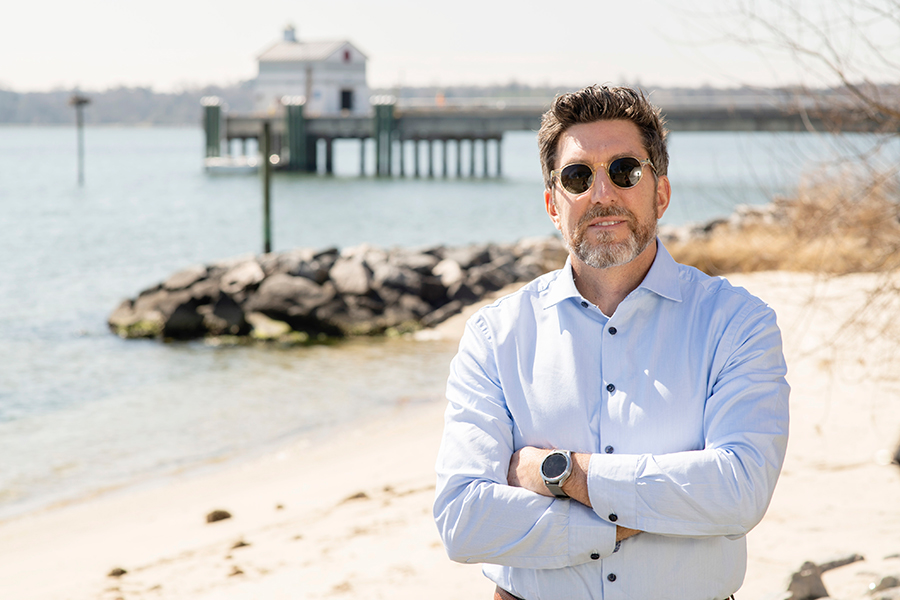
In a column in the Richmond Times-Dispatch, Aday described how research supported by Virginia’s newly approved budget will help scientists and managers better understand menhaden abundance, their availability to predators and fishing patterns in the Bay.
“The Chesapeake Bay is too important to manage by assumption,” Aday wrote.
“Dr. Aday has put the focus exactly where it belongs: on rigorous, independent science that can give decision-makers the information they need,” said Monty Deihl, CEO of Ocean Harvesters. “We appreciate his leadership and his recognition that these decisions affect both the Chesapeake Bay and the lives and livelihoods of coastal Virginians. The men and women who work on the Bay want healthy waters, strong fisheries and decisions grounded in sound science, and we are grateful to Dr. Aday and the scientists at VIMS and the Batten School for their commitment to finding answers.”
His message deserves the attention of everyone participating in the menhaden debate. Aday brings scientific expertise, a commitment to independent research and an appreciation of the stakes for Virginia’s fisheries and coastal communities. His clear explanation of why reliable data matter offers a constructive path forward for the Bay and the people who depend on it.
Aday’s leadership and the work at VIMS and the Batten School are welcome. His call for rigorous, independent science reinforces why policymakers should allow the research supported by Virginia, the federal government and the menhaden industry to be completed before imposing further restrictions on a fishery that supports working families and communities across the Northern Neck-especially since Draft Addendum II does not establish a biological problem that its proposed restrictions would solve.
Aday points to the long-term research behind the management of blue crabs and the restoration of eelgrass and bay scallops as examples of the value of establishing baselines, measuring results and letting evidence guide decisions. His column makes a compelling case for bringing that same commitment to the questions surrounding menhaden.
The menhaden industry has invested directly in finding answers. Through the Science Center for Marine Fisheries (SCEMFIS), the industry supports a research roadmap identifying practical methods and studies that can produce the information needed for a scientifically defensible Chesapeake Bay harvest cap. Scientists from the University of Maryland Center for Environmental Science, VIMS and NOAA are reviewing existing research and developing approaches for filling information gaps. That work, and the separately funded federal research and the Commonwealth of Virginia’s investment in VIMS research should be completed and their findings considered before additional restrictions are enacted.
The families who fish and process menhaden have a direct stake in the outcome. Their future depends on a healthy Bay, thriving fish and birds, and a sustainable fishery they can pass on to their children and grandchildren. For generations, the fishery has supported union jobs, wages and benefits for Northern Neck families, including many African American workers.
In a letter to Gov. Abigail Spanberger, Virginia NAACP President the Rev. Dr. Cozy Bailey urged the Commonwealth to maintain the existing Chesapeake Bay harvest cap while Virginia-funded scientific research is completed. He emphasized that the fishery provides wages, health insurance, retirement benefits and stability for African American workers and union families, and that comparable jobs cannot simply be assumed to replace them.
UFCW Local 400, which represents menhaden fishermen, has called on lawmakers and the Atlantic States Marine Fisheries Commission to refrain from additional Chesapeake Bay restrictions until ongoing research establishes their necessity. The union has also called for working people to have a voice in decisions affecting their livelihoods and communities.
Aday’s commitment to healthy waters, strong fisheries and decisions grounded in sound science is an example for everyone involved in the menhaden discussion. His leadership, and the work of scientists at VIMS and the Batten School, will help provide the answers needed to guide the Bay’s future.
About Ocean Harvesters
Ocean Harvesters owns and operates a fleet of more than 30 fishing vessels in the Atlantic Ocean and Gulf of America. The company’s purse-seine fishing operation is exclusively engaged in the harvest of menhaden, a small, nutrient-dense fish used to produce fish meal, fish oil, and fish solubles. Both its Atlantic and Gulf Menhaden fisheries are certified sustainable by the Marine Stewardship Council. Committed to responsible fishing operations, Ocean Harvesters is proud to be heir to a fishing legacy that extends nearly 150 years.
Press Contact
Stove Boat Communications
(202) 595-1212
contact@stoveboat.com
SOURCE: Ocean Harvesters
View the original press release on ACCESS Newswire
Media gallery