Norck Robotics Expands Custom Motion Control and EOAT Engineering Support for Automation Developers
The expanded service helps robotics teams evaluate actuation, sensing, tooling, components, and system architecture

Press Release Disclaimer: This is a press release distributed through the XPR Media network. It has not been independently verified by our newsroom.
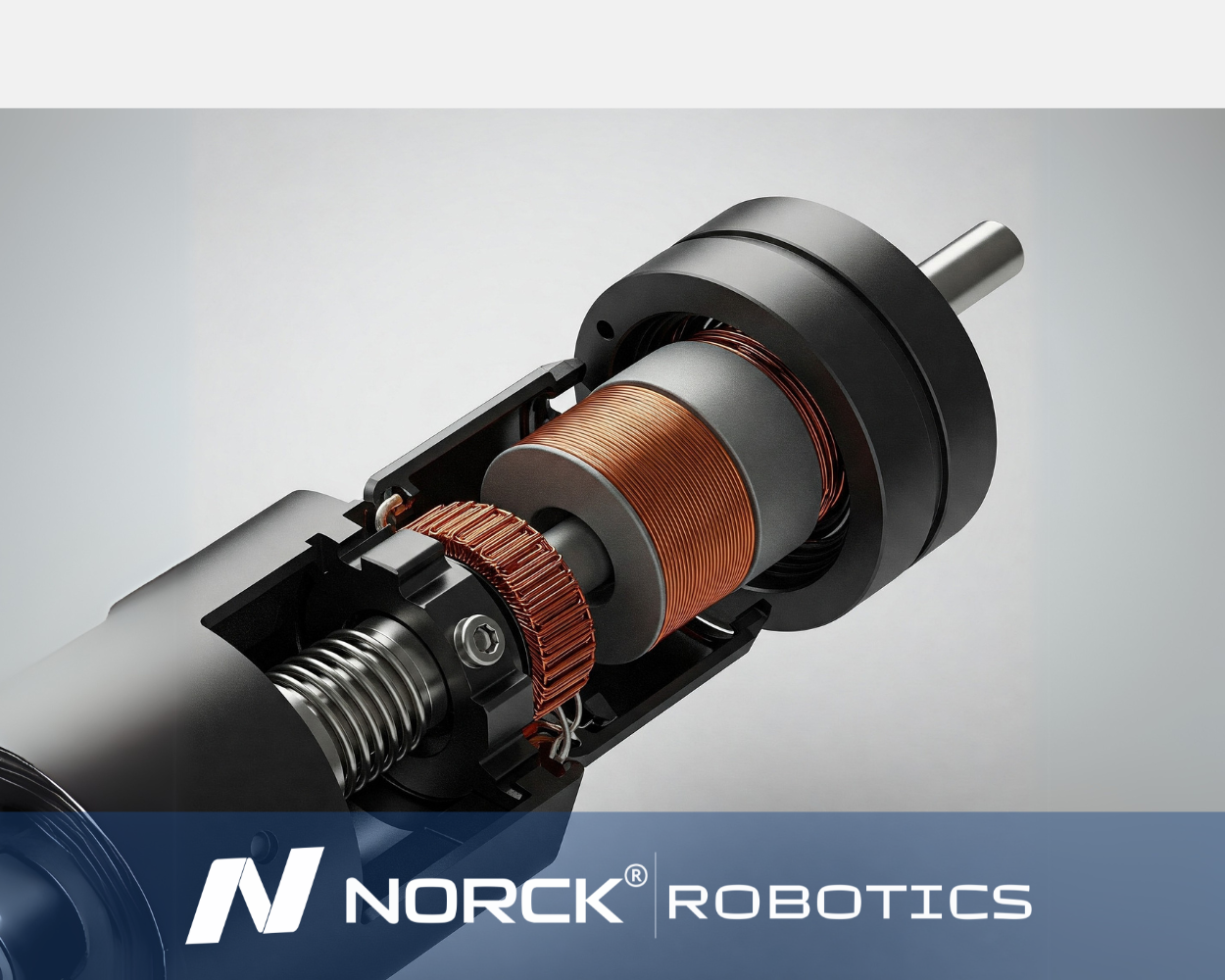

The expanded service helps robotics teams evaluate actuation, sensing, tooling, components, and system architecture before prototyping and production.
IRVINE,CALIFORNIA, CA, UNITED STATES, August 27, 2026 /EINPresswire.com/ — Norck Robotics announced an expansion of its engineering support for custom motion control systems, robotic joints, end-of-arm tooling, and industrial automation applications. The expanded service is designed to help robotics developers, equipment manufacturers, and automation integrators move from an initial system concept to a technically reviewed design, functional prototype, and scalable production plan.
Norck Robotics provides industrial robotics solutions that bring together mechanical design, motion control, sensing, precision components, automation hardware, and manufacturing support. The company works as a technical engineering partner rather than solely as a component supplier, helping customers evaluate how individual parts will perform as part of a complete robotic system.
Its capabilities include custom robot design, robotic systems engineering, system integration, precision manufacturing, rapid prototyping, and on-demand production. Each project is reviewed according to payload, travel, speed, positioning accuracy, repeatability, available installation space, duty cycle, operating environment, and expected production volume.
Engineering Review for Robotic Systems and Automation Equipment
Norck Robotics works with customers developing complete robotic systems as well as individual motion modules, joints, grippers, end effectors, structural components, and custom assemblies. Its robotics engineering services include concept evaluation, mechanical design, component selection, design optimization, prototyping, and manufacturing support.
During the engineering review, Norck Robotics examines the relationship between actuator capacity, payload, joint configuration, mechanical stiffness, sensing, control requirements, and system weight. This process can help identify issues involving actuator sizing, component access, structural deflection, thermal conditions, and manufacturability before the system reaches production.
The company also supports the development and sourcing of industrial automation parts, precision-machined components, lightweight robotic structures, carbon fiber structures, mounting hardware, and application-specific assemblies. For engineering teams evaluating precision components manufacturers, this combined design and manufacturing approach provides a more direct route from technical review to validated parts.
Motion Control and Precision Actuation Systems
Selecting an actuator requires more than matching a motor to a load. Travel distance, acceleration, duty cycle, transmission efficiency, backlash, available space, control architecture, and environmental conditions all affect system performance.
Norck Robotics supports the development of precision actuation systems for linear positioning, rotary movement, compact adjustment, and controlled robotic motion. A precision linear actuator may be used in inspection equipment, laboratory automation, semiconductor handling, and positioning stages where controlled movement and repeatability are required.
For robotic axes and automated machinery requiring load capacity and accurate linear travel, a ball screw linear actuator can provide an efficient mechanical transmission method. Lead screw actuators may be appropriate for compact positioning, moderate-speed adjustment, and applications where a simpler motion architecture is preferred.
A voice coil actuator can support short-stroke, responsive movement in optical systems, testing equipment, medical devices, and precision alignment applications. For compact pneumatic and fluid-control assemblies, a miniature valve actuator can regulate flow where installation space is limited.
Rotary movement in robotic joints requires coordinated control of torque, backlash, stiffness, weight, and packaging. A robot joint actuator may combine a motor, transmission, encoder, bearing system, and housing into an integrated assembly. A Harmonic drive actuator may be considered for applications requiring compact rotary motion and a high reduction ratio, including collaborative robots, medical robotics, and multi-axis automation.
Norck Robotics also supports the integration of high-speed precision bearings in robotic joints, rotating assemblies, spindles, and positioning systems where alignment and controlled motion are important.
EOAT and Custom Robotic Gripping Solutions
Norck Robotics develops custom end-of-arm tooling for components with different shapes, weights, textures, surface conditions, and levels of fragility. EOAT development may include gripper selection, finger design, vacuum systems, tool changers, mounting plates, sensing, and robot-interface requirements.
A soft robotics gripper can help handle delicate, irregular, or easily damaged products in food processing, packaging, laboratory automation, and consumer goods production. For compact components and precision assembly, a pneumatic micro-gripper can support controlled picking, placement, testing, and positioning in electronics, medical devices, and semiconductor manufacturing.
Vacuum gripping systems can incorporate a miniature electric vacuum pump when localized vacuum generation is preferred over centralized pneumatic infrastructure. Norck Robotics evaluates the gripper, actuator, sensor, and mounting structure as a coordinated EOAT assembly rather than as unrelated components.
Sensors, Feedback, and Closed-Loop Control
Reliable robotic movement depends on measuring position, load, contact, and system response. Norck Robotics integrates force and torque sensors into robotic wrists, assembly systems, testing equipment, and collaborative applications where controlled interaction is required.
Feedback Sensors and motion feedback systems provide data related to position, velocity, and actuator response. When used with closed-loop control systems, these signals allow robotic equipment to detect deviations and adjust its movement according to the control strategy.
The company evaluates sensing architecture alongside actuator behavior, mechanical compliance, controller requirements, and application safety. This systems-level approach supports advanced motion control and precision positioning without treating sensors, actuators, and mechanical structures as isolated elements.
Robotics Applications Across Advanced Industries
Norck Robotics supports industrial robotics, factory automation, collaborative robotics, medical robotics, defense robotics, aerospace automation, automotive production, and smart manufacturing. Applications include assembly, machine tending, inspection, testing, material handling, packaging, and precision positioning.
Warehouse and logistics automation systems may use robotic motion for sorting, picking, transfer, and order handling. Semiconductor and laboratory automation often require compact actuators, stable structures, controlled motion, and high-precision components. Packaging and food-processing systems may use soft grippers, vacuum tooling, and custom EOAT to handle products while limiting deformation or surface damage.
Robotic systems used in active production environments may also require Industrial safety systems, guarded operating areas, safety-rated controls, and application-specific risk-reduction measures. Safety requirements are reviewed according to the system design, intended operating environment, and integration responsibilities.
“Our objective is to help customers resolve important engineering questions before a robotic system reaches production,” said Mucahit Basaran, CEO of Norck Robotics. “By bringing together motion control, precision components, integration support, and scalable manufacturing, Norck Robotics helps development teams improve reliability, shorten iteration cycles, and prepare their systems for real operating conditions.”
Request a Robotics Engineering Review
Robotics developers and automation integrators can submit CAD models, payload requirements, motion ranges, target speeds, positioning tolerances, duty cycles, control interfaces, and operating conditions for technical review.
Norck Robotics evaluates the proposed system architecture, actuator selection, sensing requirements, EOAT design, component manufacturability, and integration considerations before recommending an application-specific development approach.
To request a robotics engineering review, contact info@norck.com.
Future Development in Smart Robotic Solutions
Norck Robotics plans to continue developing its motion control, actuation, sensing, EOAT, and robotic systems engineering capabilities. Its focus includes lightweight mechanical structures, compact motion assemblies, integrated sensing, and end-to-end automation support for customers moving from prototype systems to deployable automation.
The company combines high precision manufacturing, custom engineering, and robotic systems integration to develop scalable Smart Robotic Solutions for different industries and production requirements.
About Norck Robotics
Norck Robotics provides Smart Robotic Solutions, Robotics Engineering Services, Custom Engineering Solutions, and Industrial Automation Solutions for robotics developers, system integrators, and advanced manufacturers. Its capabilities include Robotic Systems Integration, Precision Actuation Systems, custom EOAT, motion control, sensing, Precision Manufacturing, and End-to-End Engineering Support. Norck Robotics supports customers through system design, rapid prototyping, on-demand manufacturing, integration, and scalable production.
Media Contact:
Rabia Koca
Digital Product Manager
info@norck.com
Rabia KOCA
Norck
email us here
Visit us on social media:
LinkedIn
Facebook
Legal Disclaimer:
EIN Presswire provides this news content “as is” without warranty of any kind. We do not accept any responsibility or liability
for the accuracy, content, images, videos, licenses, completeness, legality, or reliability of the information contained in this
article. If you have any complaints or copyright issues related to this article, kindly contact the author above.

Media gallery